Now Available
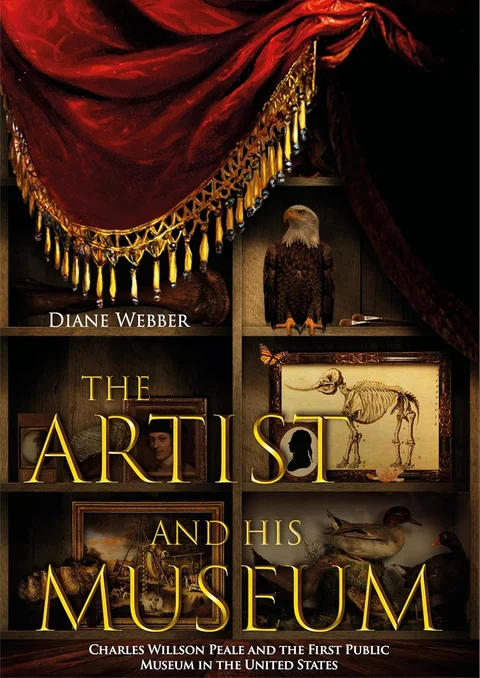
The Artist and His Museum
Charles Willson Peale and the First Public Museum in the United States
How did a talented but struggling portrait painter muster the imagination, curiosity, connections, and never-say-never persistence to create the country's first public museum of science, art, and culture? And where did it go?
Choose your bookseller:
About The Artist and His Museum
Before the Smithsonian, before the great museums of New York and Washington, Charles Willson Peale dared to believe that ordinary Americans deserved a place to wonder. He was already a celebrated portrait painter, a Revolutionary War veteran with a restless, unstoppable mind — when a chance observation while sketching fossilized bones sparked an audacious idea: what if his art gallery became a museum of the natural world? People would come. People might even pay.
What Peale built in Philadelphia was unlike anything that had come before — not the private “cabinet of curiosity” of wealthy collectors, but a public institution organized by the best scientific thinking of the age, open to all citizens of the young republic. It survived yellow fever, always teetered on the edge of financial ruin, and moved multiple times. It pioneered innovations in paleontology and taxidermy. It was Peale’s life’s work and his great dream — and then, almost without trace, it disappeared. The Artist and His Museum is the story of how one extraordinary man and the people he pulled into his orbit, voluntarily and enslaved, created something the world had never seen, and why it still matters today.